
I’ll be honest — I never found an ADHD planner that truly worked for me until I created my own. That’s how the ThriveMind Planner was born: an ADHD daily planner designed specifically for neurodivergent minds. And I love it.
But let’s be real — not everyone can or should have to pay for planning tools. Paid options shouldn’t be the only options.
The world needs more accessible, ADHD-friendly planning resources for both adults and kids. If you live with ADHD, you probably know the feeling: your day starts with good intentions, but soon your mind fills with scattered thoughts, unfinished tasks, and mental sticky notes. Before long, overwhelm creeps in, and it’s hard to figure out where to begin.
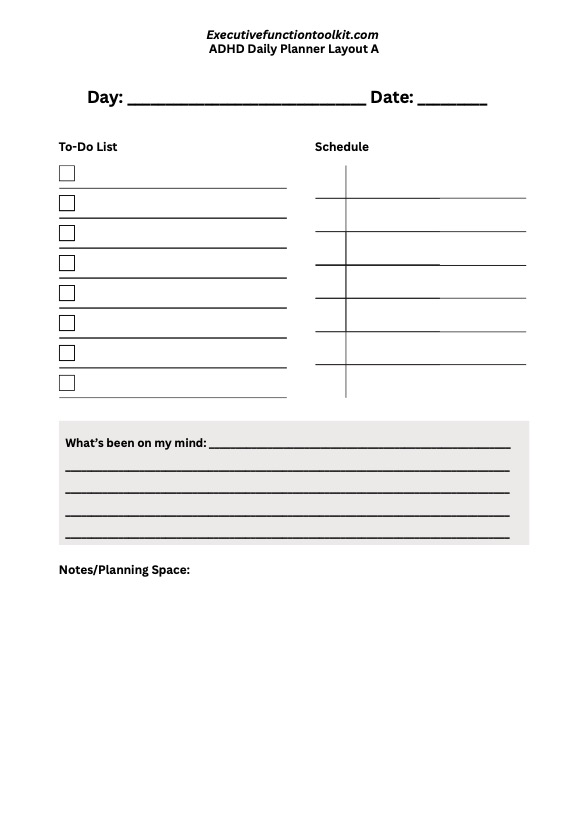
That’s exactly why I created ADHD Daily Planner Layout A — a simple, free printable designed to help neurodivergent brains offload mental clutter, organize the day, and build a plan that feels doable.
In this post, I’ll walk you through the thinking behind this layout and share a downloadable link so you can try it for yourself!
What is ADHD Daily Planner Layout A?
This free ADHD daily planner printable keeps things clean and minimal, offering just the structure you need:
To-Do List and Schedule
Side-by-side spaces to list your most important tasks and map out when you’ll tackle them.
What’s been on my mind?
A space to brain dump those racing thoughts, reminders, worries, or ideas — freeing up mental bandwidth for the tasks ahead.
Notes / Planning Space
Extra room for ideas, reflections, or anything you need to jot down along the way.
No clutter, no distractions — just a gentle adhd productivity framework to support your focus.
How This Daily ADHD Planner Supports Executive Function Challenges
Here’s how this layout can make a difference:
- Working memory support — Get your thoughts out of your head and onto paper so you can stop trying to juggle everything mentally.
- Task initiation aid — Seeing a clear, simple list reduces the friction that makes starting tasks so tough.
- Gentle time management — A visual schedule offers structure without the pressure of rigid time blocks.
Example: If you often catch yourself thinking “Wait, what was I supposed to do today?” this layout helps you stay anchored and revisit your priorities.
Tips for Getting the Most from Layout A
- Set a small daily habit: fill it out first thing in the morning or the night before.
- Treat the “What’s been on my mind” section like a brain dump — no judgment, just unload.
- Consider pairing this layout with a timer (like the Pomodoro Technique) to build momentum.
- At day’s end, glance back at your notes to spot wins, patterns, or areas for adjustment.
Download Your Free ADHD Daily Planner Layout A
Click below to download this free ADHD daily planner printable designed to support neurodivergent brains:
[Download ADHD Daily Planner Layout A (PDF)]
[Download ADHD Daily Planner Layout A2 (PDF)]
How Extra Planning Support Helps Those with ADHD
People with ADHD often face challenges in areas tied to executive functioning — the mental skills we use to plan, organize, prioritize, start tasks, and see them through. Extra planning support helps bridge those gaps in meaningful ways.
1. Reduces Mental Clutter
ADHD brains often juggle dozens of ideas, reminders, and unfinished tasks at once. Extra planning tools provide a place to offload these thoughts, freeing up mental energy and lowering stress.
Example: A planner gives a safe, external space to hold “I need to email Alex” so you’re not trying to remember it all day.
2. Strengthens Task Initiation
Getting started can be one of the hardest parts of ADHD. Clear, written plans break big tasks into smaller, more approachable steps — helping reduce overwhelm and decision fatigue.
Example: Instead of “clean the house,” the plan says “clear off kitchen table,” making it easier to begin.
3. Supports Time Awareness
ADHD often comes with time blindness — difficulty sensing how time passes or estimating how long things take. Planning tools help make time visible, so you can balance your day and avoid accidental time sinks.
Example: A planner that maps out the day helps you see where time is going and where buffer time is needed.
4. Encourages Prioritization
With ADHD, everything can feel equally urgent, making it hard to know what to do first. Extra planning support helps sort tasks by importance or energy level, so you can focus where it matters most.
Example: A planner might guide you to pick a top priority for the day — reducing the stress of juggling too much at once.
5. Builds Consistency and Self-Compassion
When planning becomes a habit, it helps create structure, celebrate small wins, and reflect on progress. This can ease feelings of failure and support emotional regulation.
Example: Reviewing a daily plan at night helps you see what you accomplished — not just what’s left.
How Using an ADHD Daily Planner Builds Self-Confidence
1. Creates Small, Achievable Wins
Every time you write down a task and check it off, your brain gets a hit of positive reinforcement. This builds a sense of capability: “I said I’d do it, and I did.” Over time, these small wins add up, helping to counter feelings of failure or self-doubt.
Example: Even checking off “make the bed” or “drink water” reminds you that you can follow through.
2. Makes Progress Visible
People with ADHD often struggle to recognize their own progress because so much happens internally. A planner externalizes your effort — showing, on paper, that you are moving forward, even if it doesn’t feel like it.
Example: At the end of the week, seeing a page filled with notes, checked boxes, or even scribbles helps validate your hard work.
3. Reduces Overwhelm
When you’re overwhelmed, confidence takes a hit. A planner helps break down big, intimidating tasks into smaller steps, making challenges feel more manageable and less scary.
Example: Instead of “write the report,” your plan says “outline report > write intro > draft section 1.” That’s far less daunting.
4. Encourages Self-Compassion
Planning tools can include space for reflection or gentle prompts (like “What went well today?”). These encourage you to see and celebrate your strengths, rather than fixate on what you didn’t do.
Example: A daily “What went well?” note helps shift your focus toward positives, reinforcing self-worth.
5. Helps Build Trust in Yourself
When you see that planning helps you follow through (even imperfectly), you start to rebuild trust in your abilities. Instead of thinking “I never stick with anything”, you gather evidence that you can organize, start, and finish tasks.
Explore More ADHD Daily Planner Layouts
Every brain is different. If this layout isn’t quite what you need, check out these other free options:
- ADHD Daily Planner Layout B: Make a Plan and Adjust in Real Time
- Browse all ADHD planner printables or check out the ThriveMind Neurodivergent Daily Planner!
Subscribe
Enter your email below to receive updates.
Leave a Reply