
Category: Motivation & Reward
-
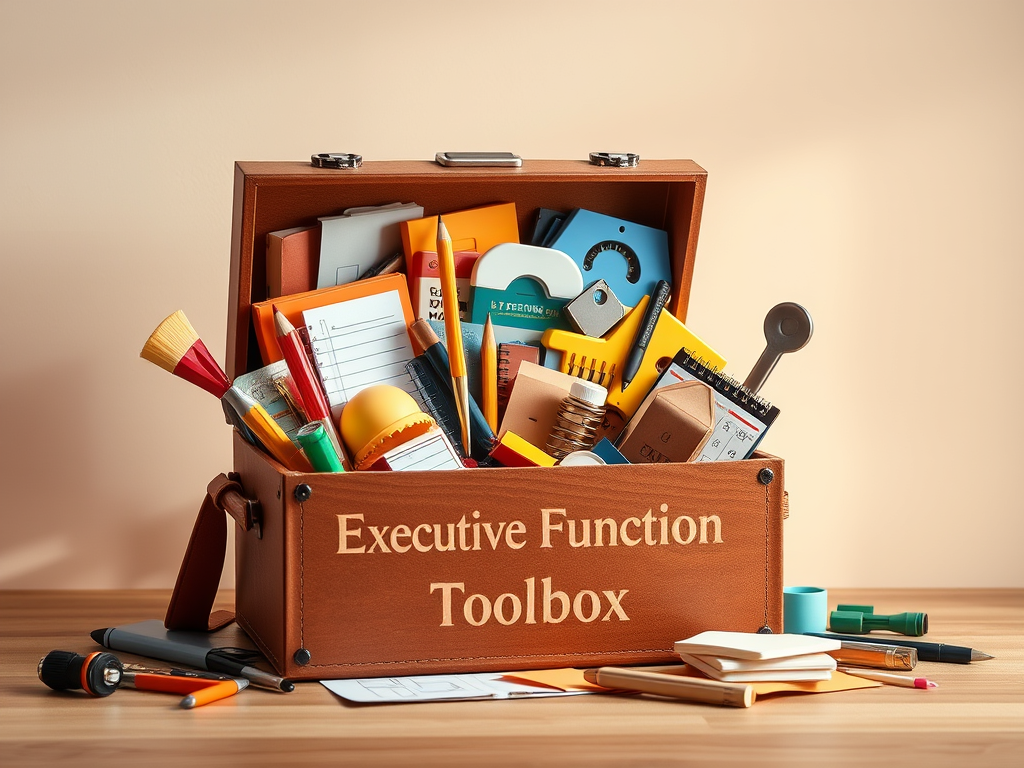
Executive Function Toolbox for Adults (PDF Download): The 9 Skills Every Neurodivergent Adult Needs
—
in PDF, Printable & Downloads, Accountability, Burnout & Overwhelm, Cognitive Flexibility, Emotional Regulation, Environment and Sensory, Executive Function Coaching, Motivation & Reward, Neurodivergent-Friendly Planners, Strategies and Supports, Student Resources, Task Management, Teacher Resources, Teen Resources, Time Management, Transition, Working MemoryIf you’re wondering if an executive function toolbox would benefit you, it probably would. If you’ve ever felt like life takes more effort than it should—like planning, organizing, prioritizing, or shifting tasks feels harder for you than for other people—you’re not imagining it. These challenges are tied to a set of mental abilities called executive…
-

2025 Best Planner for ADHD: The ADHD-Friendly Executive Function Daily Planner System That Actually Works
Finding the best planner for ADHD feels impossible, and it’s a waste of time and money to purchase a planner with the best intentions only to abandon it a week later. But this is the reality for those who struggle with ADHD—especially those who desperately wish to be organized but just can’t figure out how…
-

10 Practical Executive Function Strategies for Adults (That Actually Work)
Executive function skills are the brain’s management system, helping you plan ahead, prioritize tasks, regulate emotions, and follow through on commitments. For adults—especially those balancing work, home, and personal goals—strong executive functioning can be the difference between feeling in control and feeling constantly overwhelmed. The good news? Executive function skills in adults aren’t fixed. If…
-
A Beginner-Friendly Glossary for Understanding Neurodivergence and Executive Function
—
in Accountability, Blog, Cognitive Flexibility, Emotional Regulation, Environment and Sensory, Executive Function Coaching, Identity and Self Concept, Motivation & Reward, Neurobiology, Strategies and Supports, Student Resources, Task Management, Teacher Resources, Teen Resources, Time Management, Transition, Working MemoryWhen you first start learning about executive function or neurodivergence, it can feel like stepping into a conversation mid-sentence. Words are used like everyone already knows what they mean. Concepts like task initiation, masking, or emotional regulation are mentioned without explanation. And terms like neurodivergent, working memory, or identity spiral might sound familiar—but foggy. That’s…
-

What to Look for in an Executive Function Daily Planner for Students
—
in Accountability, Blog, Cognitive Flexibility, Emotional Regulation, Environment and Sensory, Executive Function Coaching, Motivation & Reward, Neurodivergent-Friendly Planners, Strategies and Supports, Student Resources, Task Management, Teacher Resources, Teen Resources, Time Management, Transition, Working MemoryExecutive function skills are essential for academic success and overall well-being, especially for students with ADHD, autism, or other neurodivergent conditions. These skills include the ability to manage time, stay organized, initiate tasks, and regulate emotions—all of which can be challenging for neurodivergent students. An Executive Function Daily Planner for students can be a game-changer,…
-

The Science of Planning with Executive Function Challenges
—
in Accountability, Blog, Cognitive Flexibility, Emotional Regulation, Environment and Sensory, Executive Function Coaching, Identity and Self Concept, Motivation & Reward, Neurobiology, Neurodivergent-Friendly Planners, Strategies and Supports, Student Resources, Task Management, Teacher Resources, Teen Resources, Time Management, Transition, Working MemoryYou sit down with your planner and a fresh pen, determined to map out your week. But after 20 minutes of staring at the blank page—heart racing, mind spinning—you find yourself scrolling social media instead. Sound familiar? If planning leaves you overwhelmed, frozen, or frustrated, you’re not alone—and you’re not broken. The challenge isn’t a…
-

20 Most Common Motivation Types—and What They Reveal About Goal-Oriented Behavior
Motivation isn’t one-size-fits-all; it’s a mosaic of impulses, needs, and emotional states. Sometimes it’s a quiet inner pull. Other times it’s a burst of urgency. Some days, we’re driven by vision and purpose; others, by fear or guilt. Understanding what motivates us—and how those motivations shape our behavior—can unlock powerful insights into why we act,…
-

Motivation Through the Lens of Emotional Safety
You want to do the thing. You’ve set the intention. You’ve told yourself it matters. Maybe it’s something you’ve dreamed about, planned for, or even love deeply. And yet… nothing happens.You freeze. You scroll. You walk in circles. You do everything except start. Then comes the self-criticism:“What is wrong with me?”“Why can’t I just do…
-

How to Set Neurodivergent-Friendly SMART Goals (Without Burning Out)
—
in Accountability, Blog, Burnout & Overwhelm, Cognitive Flexibility, Emotional Regulation, Environment and Sensory, Executive Function Coaching, Identity and Self Concept, Motivation & Reward, PDF, Printable & Downloads, Strategies and Supports, Student Resources, Task Management, Teacher Resources, Teen Resources, Time Management, Transition, Working MemoryYou’ve probably heard it before: “You just need to set better goals.”But if you’re neurodivergent—especially if you live with ADHD, autism, or executive function challenges—you’ve likely experienced how unhelpful that advice can feel in practice. Maybe you sat down to map out your goals and ended up frozen. Or you started strong, then lost momentum.…
-

The Difference Between Activation and Motivation
Waiting to feel motivated can keep you stuck. This post in the Task Initiation & Resistance Series explains the crucial difference between motivation (a feeling) and activation (a skill). You’ll learn how to practice micro-starts, lower the bar, and use brain-friendly strategies to begin—whether or not you feel ready. And Why Learning the Difference Can…