
Tag: anxiety
-

Mood Regulation (ADHD Differences)
If you live with ADHD—or care for someone who does—you’ve likely noticed that emotions can feel bigger, harder to manage, and more unpredictable. While many people occasionally struggle to regulate their feelings, mood regulation challenges are especially common for those with ADHD. But what does mood regulation really mean? And how are these experiences different…
-

What Are Executive Functioning Skills?
Executive functioning skills are fundamental cognitive skills that include our abilities to plan, prioritize, organize, remember information, and regulate our emotions so we can complete daily tasks successfully. If you’ve ever wondered what are executive functioning skills or how they impact your life, you’re not alone—but you are ahead of the curve, because we are just beginning…
-

When Identity Feels Like a Battleground: A Gentle Guide for Navigating Self-Criticism and Overwhelm
The SOS page of the ThriveMind Planner is something I’d been envisioning for a long time. It’s designed for those horrific internal moments — the moments when everything feels like it’s crumbling, and despite your best efforts, you just can’t seem to escape as it all comes crashing down. In those moments, I tend to…
-

10 Adult ADHD Coping Strategies for Beating Executive Dysfunction
Executive dysfunction is one of the most frustrating and invisible challenges of living with ADHD. You know what you want to do. You want to do it. And yet… the moment to act comes, and your brain slams on the brakes. Whether it’s starting a simple task, remembering what you were doing, or managing your…
-

Organization and Planning Skills with ADHD: Understanding the EF Skills Difference
Ever find yourself surrounded by clutter, paralyzed by the idea of organizing, and then completely overwhelmed at the thought of creating a plan to fix it? If this sounds all too familiar, you’re not alone. Society leads us to assume organization and planning skills are basic. Just make a list, right? But for many neurodivergent…
-

How to Reset Your Autonomic Nervous System: Quick Relief for Overwhelmed Minds
Have you ever felt like your mind is racing and you cannot calm down—no matter how hard you try? Or maybe the opposite: your brain just shuts off and everything feels foggy, numb, or stuck.These intense and uncomfortable states signal that your autonomic nervous system is sounding the alarm, and it’s time to stop and…
-

Emotional Regulation Daily Log: A Simple but Powerful Tool for Neurodivergent Adults
We often talk about time management and productivity when it comes to executive function support, but what about emotional regulation? For neurodivergent adults, managing emotions isn’t just about staying calm—it’s also about navigating overwhelm, avoiding shutdown, identifying patterns, and staying grounded enough to do what matters most. This is where an emotional regulation daily log…
-
🎉 Big News: My ThriveMind Planner Is Officially Coming to Kickstarter!
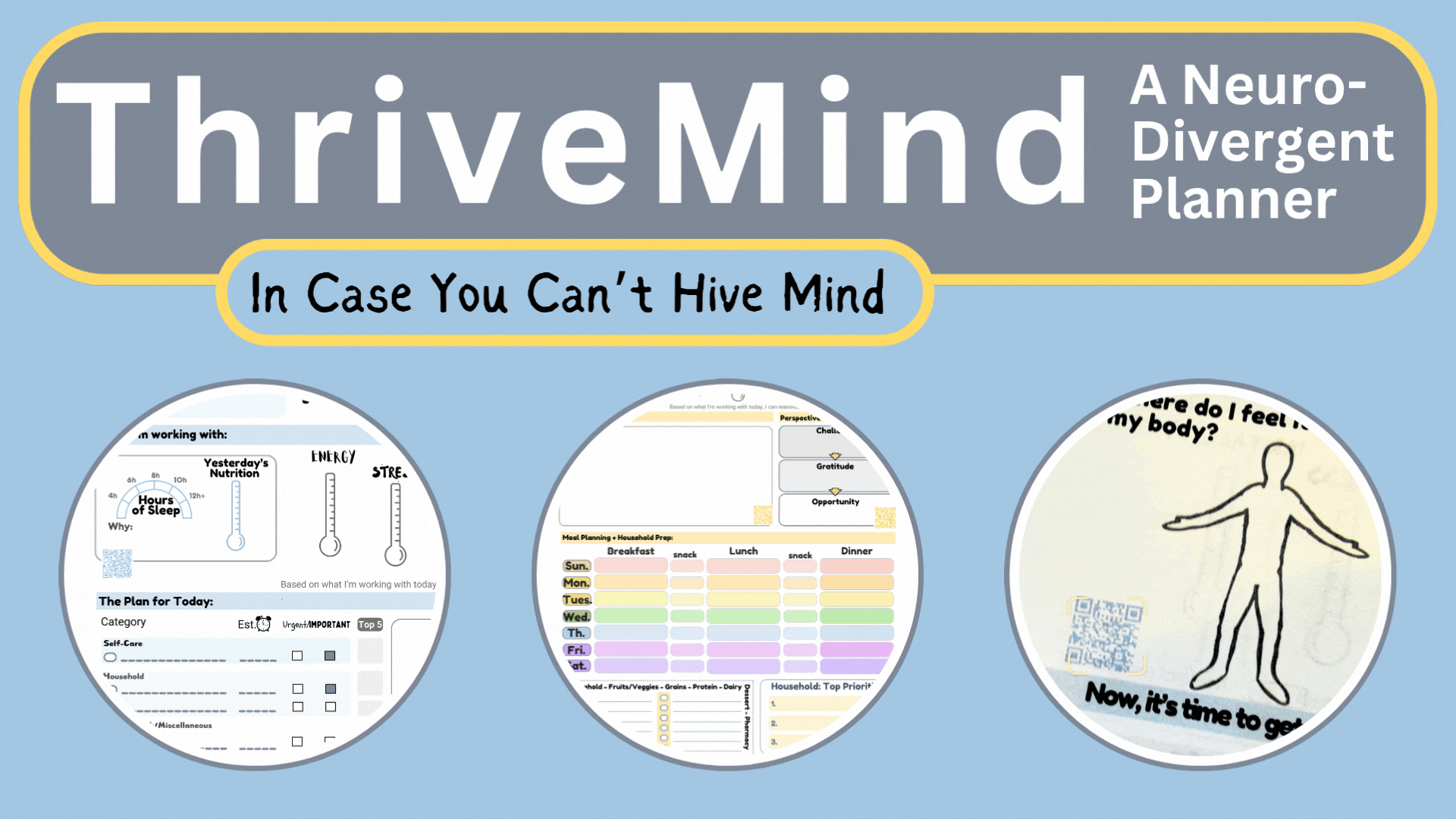
I can hardly believe I’m typing this — ThriveMind has been officially accepted by Kickstarter! After months of designing, refining, reworking (and yes, sometimes crying into my color palette), this neurodivergent-friendly planner is one step closer to becoming reality. So what is ThriveMind, exactly?It’s not your average planner. It’s not just to-do lists and calendars. It’s a brain-support tool built…
-

7 Subtle Signs of Emotional Dysregulation (and the EF Skills Behind Them)
In the previous blog post, we examined what emotional dysregulation is and isn’t, exposing how misunderstood and mischaracterized the related concepts are. The science also leaves something to be desired, considering the wide range of prevalence estimates for emotional dysregulation and adult ADHD (estimates suggest emotional dysregulation affects between 30% and 70% of ADHD adults).…
-

Emotional Dysregulation in ADHD Adults: Executive Function, Neurobiology, and the Neurodivergent Experience
If you’re a psychology buff, it might interest you to know that chronic emotional dysregulation is said to “lie at the heart” of borderline personality disorder—which is widely recognized as one of the most difficult personality disorders to treat. It can be easy to assume emotional dysregulation only refers to so-called “negative” emotions, like anger…