
If you’re an adult with ADHD, you probably know how easy it is for the whole day to blur together. And by the afternoon or evening, you’re left wondering: What did I actually get done today? or Why do I feel like I didn’t do enough — even though I tried so hard?
And this type of thinking doesn’t help with follow-through, which can feel like one of the biggest sticking points with ADHD — not because you aren’t motivated or capable, but because your executive function system needs extra support.
That’s where an ADHD daily reflection planner can be life-changing. I created ADHD Daily Planner Layout C, a free ADHD daily reflection planner, to help you pause, process your day, and build trust in yourself over time. In this post, I’ll break down why I designed it the way I did, and how it helps promote follow-through.
What is ADHD Daily Planner Layout C?
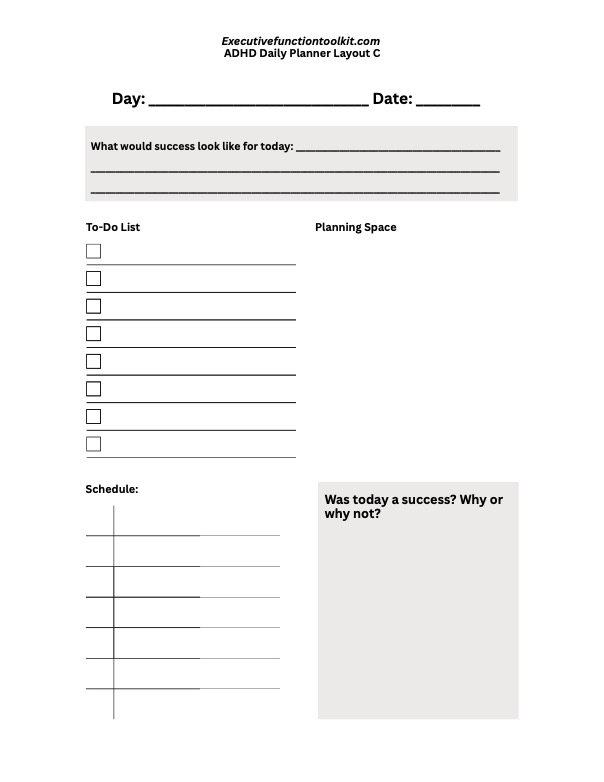
This ADHD daily reflection planner offers a simple, non-overwhelming structure with four sections to: 1) guide your day and 2) review it gently from beginning to end.
Section 1: “What Would Success Look Like for Today?”
In this layout, you begin the day by defining success for yourself. When you start your day by consciously defining success, you’re setting your brain up for clarity, focus, and a greater sense of control.
Unfortunately, ADHD can make it hard to sift through competing priorities or stay focused when everything feels equally urgent. But by defining success, you create an anchor — a specific intention that helps guide your choices throughout the day.
Beginning your day this way also reduces overwhelm. Without a clear vision of success, highly motivated people with ADHD can feel like nothing is enough — no matter how much is accomplished. When you define success in advance, you give yourself permission to focus on what really matters, and to let go of unnecessary pressure.
In addition, having a clear success statement makes it easier to stay on track and recognize when you’re drifting. It helps you return to your priority when distractions or unexpected events pop up.
Finally, when success is defined thoughtfully at the start of the day, you’re less likely to judge yourself harshly later. It shifts your focus from doing everything to doing what matters most—and that’s a mindset that fosters self-kindness.
Section 2: To-Do List + Planning Space
For adults with ADHD, the tension between needing structure and craving flexibility is real. That’s where pairing a to-do list with blank planning space can work beautifully — offering just enough guidance to support focus without creating overwhelm or rigidity. That’s why this is the first productivity space of this ADHD daily reflection planner (as well as the ThriveMind Planner).
Here’s why this combo is so effective:
- The to-do list provides direction. A to-do list captures the key tasks or priorities you want to focus on during the day. It helps reduce mental clutter by offloading those tasks from your working memory. It also keeps your most important intentions visible and concrete.
- The blank planning space promotes flexibility. The blank space invites you to map out your day as it unfolds, rather than sticking to a rigid schedule. The unstructured space allows you to jot down ideas, notes, time blocks, and adjustments as needed. You also have space to reflect, be creative, or problem-solve when unexpected things come up.
- Together, they form a gentle framework. You start the day with clear objectives, thanks to the to-do list. You stay adaptive in response to shifts, thanks to the planning space. Finally, you feel guided, but not boxed in. With this extra space, you feel the freedom you need to stay compassionate with yourself. For example, you might list that you need to “submit the report” and you might also write “call the doctor.” You can write out the steps based on your levels of interest and energy.
Section 3: Schedule Section
Once you have a rough sense of what you need to do (and the order in which you’d like to do it), you’re ready to factor in timing.
Especially for those with time management challenges, like time blindness, powerful support comes from breaking time down on paper. By using a schedule, you’re less likely to over-pack your day or lose track of where the time went.
Section 4: “Was Today a Success? Why or Why Not?”
This powerful reflection prompt helps you look at your day with curiosity, instead of pure judgment.
For those with ADHD, follow-through can feel like a double-edged sword. On one side is the pressure to complete tasks; on the other is the shame when plans change or things don’t go as expected. The simple act of ending the day with “Was today a success? Why or why not?” helps break this cycle — allowing time to process what happened and recognize you did your best.
Ideally, this section of the ADHD daily reflection planner helps capture small wins, spot negative thinking patterns, and adjust your perspective with kindness — all of which are key steps in strengthening executive function.
How Layout C Supports ADHD and Executive Function Challenges
As a result of these combined planner sections, this layout is especially helpful for adults with ADHD who want to:
- Boost working memory and follow-through — The reflection section helps reinforce what worked and why.
- Reduce overwhelm and shame — Instead of focusing on what didn’t happen, you learn from what did and adapt gently.
- Build consistency over time — Daily reflection creates a positive feedback loop, helping you see progress and feel motivated.
Example: If you often feel like “I didn’t get enough done,” this ADHD daily reflection planner helps you shift focus to what went well — and why.
Download Your Free ADHD Daily Reflection Planner (Layout C)
Download ADHD Daily Reflection Planner Layout C (PDF)
Why Follow-Through Support Matters for Adults with ADHD
For adults with ADHD, follow-through can be one of the most frustrating challenges. You might have great ideas, good intentions, and even solid plans — but bridging the gap between starting and finishing often feels harder than it should.
That’s because ADHD affects executive functions like task initiation, working memory, and sustained attention — all of which are essential for follow-through.
And it isn’t just about finishing tasks — it’s about building self-trust. When you follow through, even imperfectly, you:
- Feel more in control of your day.
- Reduce the cycle of shame and self-doubt that ADHD can trigger.
- Strengthen executive function over time through practice and reflection.
- Experience less overwhelm because you’re closing open loops instead of carrying unfinished tasks mentally.
A daily reflection planner like Layout C can help strengthen these skills in small, manageable ways. This ADHD daily reflection planner helps you:
- Close the loop on tasks: The end-of-day reflection prompts you to review what got done and why — turning plans into learning moments.
- Spot patterns: By noticing what supported or blocked your progress, you can adjust future plans more effectively.
- Create positive reinforcement: Writing down what went well reinforces success and motivates you to keep going.
- Develop consistency: Regular reflection builds a habit of checking in with yourself, which is a key part of follow-through.
Example: If you often forget to celebrate small wins, Layout C helps you see those wins on paper — giving your brain the “evidence” it needs to feel capable and motivated.
The more you practice follow-through (with kindness and flexibility), the easier it becomes to start, continue, and complete tasks — even on the hard days.
2 Additional Tips to Support Follow-Through for Adults with ADHD
With the right strategies, you can make follow-through easier and more reliable. Here are some tips that can help:
- Break Tasks Into Micro-Steps
Big tasks can feel overwhelming and impossible to start — and that makes follow-through harder. Breaking them into tiny, concrete steps helps you build momentum.
Example: Instead of “clean the kitchen,” start with “clear the table,” then “wipe the counter.”
- Set Gentle Check-In Points
Follow-through doesn’t mean forcing yourself through a rigid plan. Instead, set small check-ins:
- Morning: What’s the plan?
- Midday: How’s it going?
- Evening: What worked today?
Tip: Even 1–2 minute check-ins can make a huge difference.
Explore More ADHD Daily Planner Printables
Every brain is different. Explore other free planner tools to find what works for you:
- ADHD Daily Planner Layout A: Clear Mental Clutter and Focus Your Day
- ADHD Daily Planner Layout B: Make a Plan and Adjust in Real Time
- Browse all ADHD planner printables or checkout the ThriveMind Neurodivergent Daily Planner
Subscribe
Enter your email below to receive updates.
Leave a Reply