
Have you ever stared at your to-do list and felt like you were underwater? Or spent hours intending to start something—anything—but never quite getting there? If you live with ADHD, executive dysfunction, or are just deeply overwhelmed, you’re not alone.
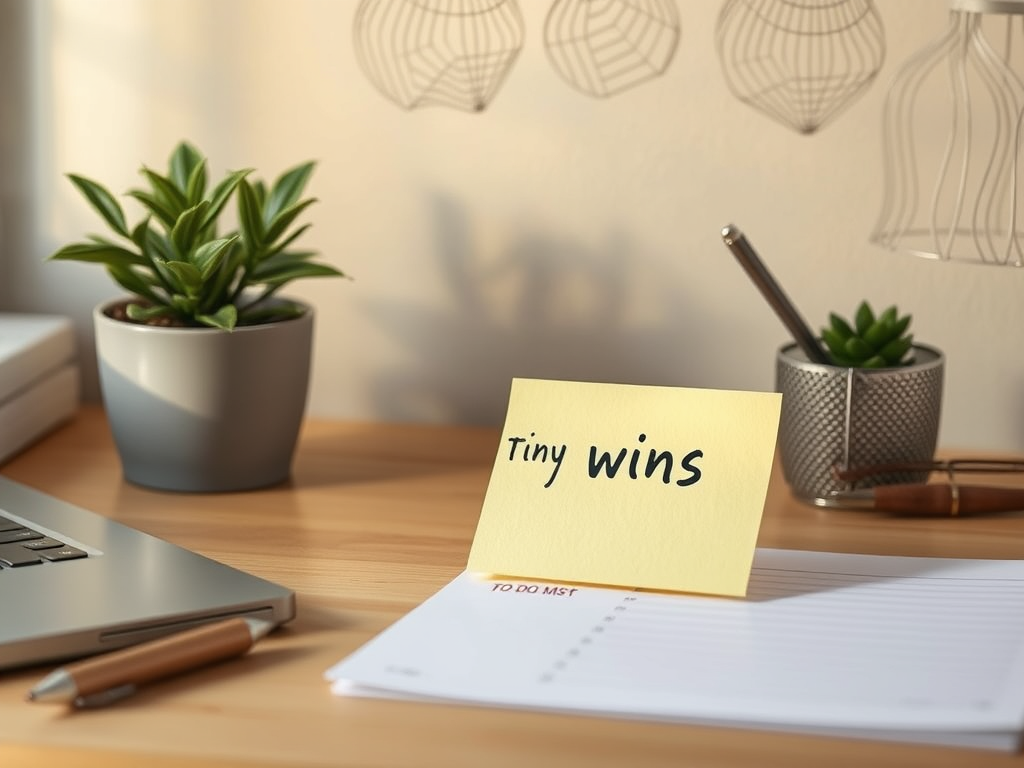
When executive function systems are offline, starting—even something small—can feel impossible. But here’s the good news: you don’t need to “power through” or overhaul your routine to get unstuck. Sometimes, a tiny win is all it takes to reset your system and reclaim your day.
Why Tiny Wins Support Executive Function
Executive function is the set of mental skills that helps us plan, organize, initiate, and follow through on tasks. When those systems are taxed—whether by stress, neurodivergence, burnout, or emotional overwhelm—the brain often defaults to ADHD autopilot or shutdown.
That’s where tiny wins come in.
Small, manageable actions support executive functioning by:
- Releasing a small amount of dopamine, which helps kickstart motivation
- Reducing decision fatigue and cognitive load
- Reconnecting you to a sense of momentum and self-efficacy
- Supporting core executive skills like task initiation, emotional regulation, and working memory
How 5 Tiny Wins Support Executive Function
Let’s explore five ADHD-friendly strategies you can use today—no pressure, no perfection required.
1. Brain Dump One Line
Why it helps:
Executive dysfunction often shows up as mental clutter. When your brain feels like 37 tabs are open, externalizing even one thought can reduce pressure. Using a brain dump helps to increase your self-awareness, which can decrease stress and anxiety. One brain dump study found that brain dumping reduced cognitive load in a treatment group of study participants.
How to do it:
Open your planner, a sticky note, or your phone. Write one sentence:
“I feel overwhelmed and don’t know where to start.”
“I need to return one email.”
“I hate how messy the kitchen feels.”
No structure. No solution. Just name what’s there.
How this tiny win supports executive function: You’ve moved a thought from your working memory into the outside world. That’s executive support.
2. Change Your Environment by 5%
Why it helps:
Environmental cues shape attention. A small shift in your surroundings can signal your brain that it’s time to try something new—without demanding big energy.
How to do it:
- Open a window
- Swap chairs
- Clear one corner of your desk
- Light a candle or change your playlist
It’s not about creating a perfect workspace. It’s about gently signaling “we’re shifting gears.”
How this tiny win supports executive function: You’ve disrupted inertia with a small act of cognitive flexibility.
3. Touch One Task (Don’t Finish It)
Why it helps:
Task initiation is often harder than task completion—especially with ADHD. But as embodied cognition tells us, progress can start the moment you intentionally and physically interact with the task.
It also externalizes your intentions, turning your attention from internal thought processes to what’s in your environment. This reduces the initiation gap, the real challenge of task initiation, by providing an easy micro-start.
How to do it:
- Open the document (don’t write)
- Set out the ingredients (don’t cook)
- Put your shoes by the door (don’t walk yet)
- Create a folder for your project
The win isn’t in completion of the task—it’s in this initial contact.
How this tiny win supports executive function: You’ve bridged the activation gap. Your brain now has something to return to.
4. Check In With Your Body
Why it helps:
Executive dysfunction and emotional dysregulation often disconnect us from our bodies. A quick grounding exercise supports regulation and working memory access.
How to do it:
- Take three slow breaths
- Name one sensation (warm, tight, jittery)
- Stretch your hands or roll your shoulders
- Drink a sip of water intentionally
No need to “fix” anything—just notice and reconnect.
How this tiny win supports executive function: You’ve returned to the present moment and re-engaged your body’s regulatory systems.
5. Say Out Loud: “I Did That”
Why it helps:
People with executive dysfunction often under-recognize effort due to their weakened self-monitoring and metacognition capabilities. Naming what you’ve done—even if it seems small—can rewire your brain to notice progress.
How to do it:
Any time you complete anything, say it aloud:
“I moved the laundry.”
“I sent the email.”
“I paused before reacting.”
You can also write it down, text a friend, or give yourself a sticker. Yes, really.
How this tiny win supports executive function: You’ve validated effort, not just outcome—and that builds internal motivation over time.
How to Build a Tiny Wins Practice
These strategies are more than hacks—they’re a way of relating to your brain with compassion. You can build a gentle system that makes tiny wins visible and repeatable:
Externalize your intentions
Use a planner (like the ThriveMind Daily Planner for ADHD Adults) or visual cue system to keep your micro-wins in view.
Start your day with one of these five tiny wins
Not five. Not ten. Just one action that reconnects you with momentum.
Celebrate what counts (not what “should” count)
Finished a task? That counts. Paused before spiraling? That counts. Wrote a list but didn’t do it? Still counts.
How It Feels to Celebrate Tiny Wins
When you celebrate a tiny win, you should hopefully feel a bit of pride, relief, or encouragement—but the most important part is that you feel safe and acknowledged by yourself.
Here’s what that might feel like, and why each emotion matters:
Pride (without perfection)
“I did something I set out to do. That matters.”
Even if the task seems small (brushing your teeth, replying to one email, picking up the laundry), it’s a signal of movement. Pride in this context isn’t arrogance—it’s a grounded sense that you showed up despite friction, distraction, or resistance. For people with executive dysfunction, this is a big deal.
- Relief—“I’m not stuck. I moved forward”: Tiny wins disrupt the freeze that often comes with overwhelm or task paralysis. The sense of relief reminds your nervous system that change is possible, momentum is building, and you’re not trapped in stasis.
- Encouragement—“If I could do that, maybe I can do a little more’: Celebrating a win gives your brain a dopamine boost, which builds motivation for the next step. It also interrupts the self-criticism spiral and replaces it with self-trust: “I am capable.”
- Self-Compassion—“That was hard for me, and I did it anyway”: Acknowledging the context of the win—your energy, emotions, and executive state—adds meaning. It lets you validate effort, not just outcome. This is especially powerful if you tend to dismiss your progress or only reward “big” accomplishments.
And what you don’t need to feel after tiny wins:
- Like you’ve “earned” rest now (you deserve rest anyway)
- Like you’ve proven something to someone else
- Like it wasn’t enough
How to make the tiny wins celebration stick:
- Say it out loud: “That was a win.”
- Use a sensory reward: a stretch, a breath, a sticker, a song
- Write it down in a log or planner
- Pair it with a mantra like: “Progress counts, not perfection.”
Final Thoughts: Momentum Over Mastery in Tiny Wins
If your executive function feels shaky, remember: you’re not lazy or broken. You’re trying to move forward with a brain that requires different scaffolding. Tiny wins are not a consolation prize. They’re a bridge.
Each small action you take is a vote for the version of yourself you’re becoming. Not the one who gets everything done—but the one who shows up anyway.
Want More Tools That Support Tiny Wins?
- Download free executive function worksheets
- Learn about ThriveMind: A neurodivergent planner built for brains like yours
Read: What Is Executive Function?
Subscribe
Enter your email below to receive updates.
Leave a Reply