
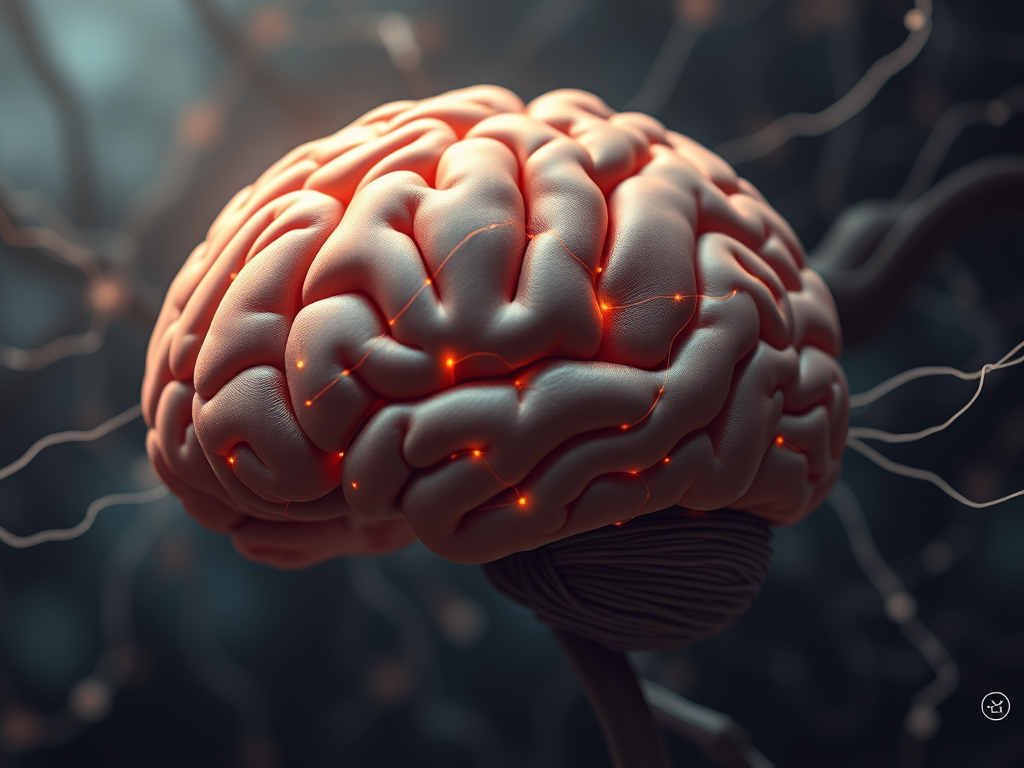
ADHD (Attention-Deficit/Hyperactivity Disorder) is widely recognized in neuroscience as a condition rooted in executive function impairment. While often described in terms of attention or hyperactivity, at its core, ADHD and executive function involves difficulties with the brain’s self-regulation system—the network of skills that allows us to plan, prioritize, initiate, sustain, and adjust behavior.
These executive functions are coordinated by a set of interconnected brain systems, primarily involving the prefrontal cortex, basal ganglia, cerebellum, and neurotransmitter pathways—particularly dopamine and norepinephrine.
In this post, we’ll explore how these interactions result in the hallmark signs of ADHD.
ADHD and Executive Function Brain Chemistry
1. The Prefrontal Cortex: The Executive Center
The prefrontal cortex (PFC) is the primary hub of executive functioning. In ADHD, neuroimaging reveals three important findings. First, imaging has shown delayed maturation of the brain and prefrontal cortex in childhood (by 2–3 years on average). In addition, it’s shown reduced activity during tasks that require planning, decision-making, and inhibition. And third, it’s revealed disrupted connectivity with other brain regions involved in memory, emotion, and reward.
This affects:
- Impulse control (inhibiting urges or reactions)
- Task initiation and follow-through
- Time management and working memory
- Emotional regulation and self-monitoring
The result: you may know what to do, but the systems for starting and sustaining that action don’t activate reliably.
2. Dopamine and Norepinephrine Dysregulation
ADHD is strongly associated with dysfunction in dopamine and norepinephrine transmission—the brain’s motivation, attention, and reward chemicals. Dopamine plays a central role in anticipating rewards, experiencing motivation, and reinforcing progress toward goals. Norepinephrine supports alertness and sustained attention.
In ADHD, the brain may have:
- Lower baseline dopamine availability
- Impaired dopamine reuptake regulation
- Underactive reward circuitry
This makes “boring” or delayed-reward tasks feel physically uncomfortable to begin or sustain—even when the person wants to do them.
3. Frontal-Striatal Circuit Dysfunction (ADHD and Executive Function)
Executive functioning relies on smooth communication between the prefrontal cortex and the basal ganglia (a set of subcortical structures involved in initiating movement and action planning).
In ADHD, this loop is disrupted:
- The frontal-striatal pathway is less efficient, leading to:
- Poor task initiation
- Difficulty maintaining focus
- Challenges with shifting or inhibiting responses
You can think of this as the “start/stop/switch gears” system being slow to respond or getting stuck in neutral.
4. The Default Mode Network (DMN) and Task-Positive Network (TPN)
Two networks play opposing roles in the ADHD brain. Let’s become acquainted with them: The default mode network is active during mind-wandering and self-reflection. The task-positive network is active during goal-directed tasks and focus. In neurotypical brains, the DMN deactivates when focus is needed.
In ADHD, the DMN doesn’t shut off efficiently, leading to:
- Drifting attention
- Intrusive internal thoughts
- Difficulty maintaining task engagement
The mind wanders involuntarily, especially during tasks lacking novelty and urgency.
5. Emotional Regulation is Key in ADHD and Executive Function
Emotional dysregulation in ADHD is deeply neurological as the result of weakened PFC-limbic system communication, which leads to stronger emotional reactivity, slower recovery from frustration, and difficulty “pausing” before reacting.
Exploring this further, we see that the amygdala (emotion center) and insula (internal state awareness) may also over-activate, and without sufficient top-down regulation, the person is more likely to spiral into overwhelm or irritability, feel intense shame or rejection sensitivity, and struggle to regain focus after emotional disruption
Emotional floods disrupt executive functioning further—creating a feedback loop of dysregulation.
What This Means for Daily Life with ADHD and Executive Function
When it comes to ADHD and executive dysfunction, it’s not a matter of laziness or lack of discipline—it’s a mismatch between how the brain is wired to manage behavior and the demands of modern life.
Thus, when we look at the symptoms of ADHD executive dysfunction, it becomes easier to understand where in the neurodivergent brain they are stemming from.
1. Difficulty Starting Tasks—Even When They Matter
Key concept: impaired dopamine signaling and task initiation circuits
Starting a task requires motivation, direction, and initiation, all of which rely heavily on:
- The prefrontal cortex (PFC): planning and initiating actions
- The basal ganglia: selecting and starting behaviors
- Dopamine: signals that something is worth doing now
With ADHD and executive function:
- Dopamine doesn’t flow easily in the mesocortical pathway, especially without immediate reward
- The “go signal” from brain to body feels absent, even when the intention is clear
- The frontal-basal ganglia loop is underactive, making task initiation feel like hitting the gas pedal in a car with no fuel
The brain recognizes the task, but the systems that launch it don’t engage without significant external stimulation or urgency.
2. Trouble Keeping Focus—Especially Without External Urgency
Key concept: poor regulation of the default mode network (DMN) in ADHD and executive function
Sustained attention requires the task-positive network (TPN) to stay active and the default mode network (DMN) to stay quiet.
With ADHD and executive function:
- The DMN remains partially active during work, leading to mind-wandering and daydreaming
- Norepinephrine dysregulation makes it harder to maintain alertness during boring or repetitive tasks
- If something isn’t immediately stimulating, the brain quickly checks out
Focus fades not because of disinterest, but because the brain’s “stay on task” circuits can’t stay locked in without novelty, feedback, or time pressure.
3. Challenges with Organizing, Planning, and Remembering Steps
Key concept: working memory and planning circuits are impaired
The dorsolateral prefrontal cortex is essential for:
- Holding task steps in mind
- Prioritizing
- Sequencing and planning
With ADHD and Executive Function:
- Working memory is fragile—it drops details unless reinforced visually or externally
- Planning feels overwhelming, especially if a task has multiple moving parts
- The brain may fail to encode next steps, causing the person to stall or abandon the process
The brain can’t manage multi-step tasks smoothly because the “mental scratchpad” gets wiped too easily under pressure or distraction.
4. High Emotional Sensitivity and Reactivity
Key concept: weak regulation between the PFC and limbic system
Executive functioning includes emotional regulation, which depends on:
- The amygdala (detects emotional salience)
- The prefrontal cortex (puts emotional reactions in context)
- The anterior cingulate cortex (monitors internal conflict)
With ADHD and executive function:
- The amygdala activates stronger or faster, especially in response to perceived threat or failure
- The PFC’s regulation is delayed or inconsistent, so emotions flood the system before logic can catch up
- This leads to impulsivity, emotional spirals, and difficulty calming down after being upset
Emotional storms arise quickly and take longer to pass—not because the person is “overreacting,” but because their regulation system is less efficient.
5. Poor Reward Sensitivity—Making Long-Term Goals Harder to Pursue
Key concept: reduced dopaminergic reward prediction
Motivation in the brain is built around reward prediction—essentially, “Do this, and you’ll feel good later.”
With ADHD and executive function:
- The brain is less sensitive to delayed rewards
- The dopamine release tied to future benefits is blunted
- Without immediate feedback, stimulation, or urgency, the brain deprioritizes the task—even if it’s important
This leads to:
- Procrastination on long-term projects
- Difficulty maintaining routines without external reinforcement
- Seeking novelty, stimulation, or immediate gratification
It’s not that people with ADHD don’t care—it’s that their brains don’t register future rewards as motivating in the moment.
All of these challenges reflect a mismatch between the internal structure of the ADHD brain and the external structure of modern life, which demands consistent planning, predictable task initiation, long-term goal pursuit, emotional composure under stress, and rewarding tasks with far-off payoffs.
For someone with ADHD and executive function, the systems that handle these demands function differently, not deficiently. The right strategies, supports, and self-understanding can help bridge that gap—not through force, but through alignment with how their brain truly works.
What Helps ADHD and Executive Function (Neurobiologically Informed Support)
Support strategies work best when they reduce cognitive load, compensate for neurotransmitter lags, and externalize executive systems:
- Visual planning tools and reminders
- Microtasking and low-friction task initiation rituals
- Body-based regulation (movement, breath, rhythm)
- External structure and accountability
- Tools that trigger dopamine gently (e.g., novelty, music, rewards)
- Compassionate pacing, allowing for effort variability
Want to learn more about ADHD and executive function?
What is executive function, anyways?
Subscribe
Enter your email below to receive updates.
Leave a Reply