
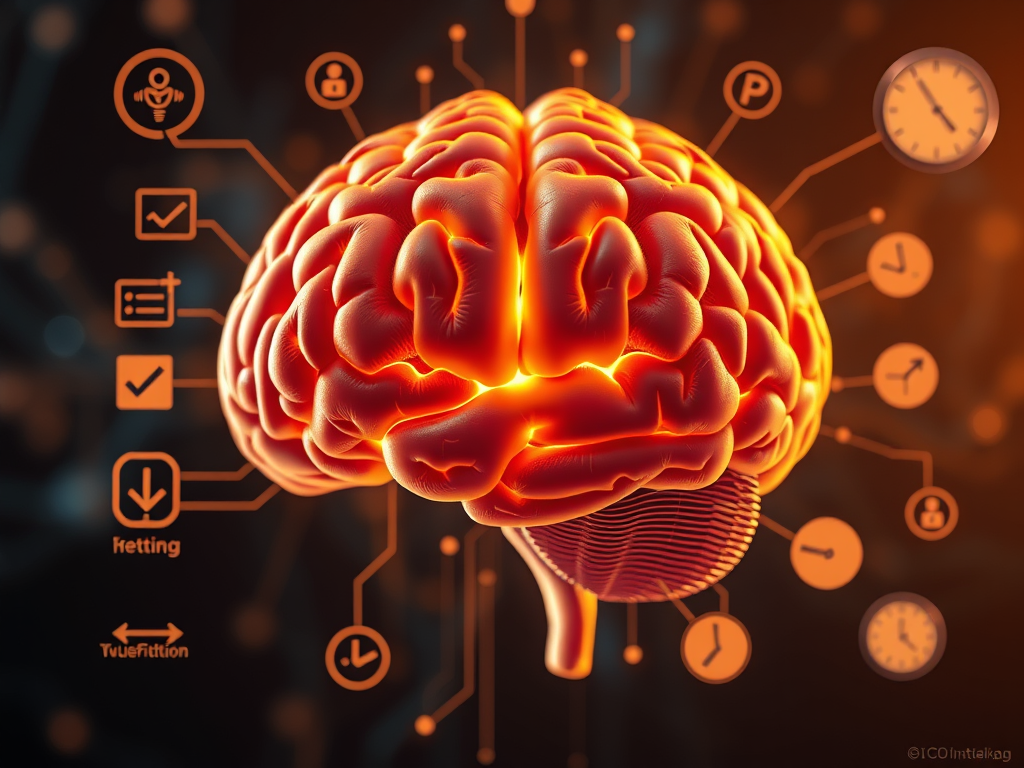
In psychology and neuroscience, executive functions in the brain are a set of fundamental cognitive skills that serve as the mind’s management system, helping us plan, organize, start, monitor, and adjust behaviors to navigate daily life.
These areas are affected by neurodevelopmental disorders like ADHD and autism spectrum disorder (ASD). If you have these disorders (or other conditions that impact executive function), it’s critical to understand how these aspects of your neurobiology interact, especially if you find it hard to cut yourself slack when things go wrong.
This FAQ-style ef blog post explores 14 questions relating to executive function in the brain:
- What are executive functions in the brain?
- What does executive function do?
- What part of the brain controls executive function?
- At what age does executive function fully develop?
- What is executive function psychology?
- What is high executive function in the brain?
- Why do high executive functions in the brain matter?
- What is poor executive function in the brain?
- Why do poor executive functions in the brain matter?
- What is executive dysfunction?
- What is an example of executive dysfunction?
- What does executive dysfunction feel like?
- What to do about executive dysfunction?
- What helps with executive dysfunction?
Section 1: Executive Function Basics
1. What are executive functions in the brain?
Executive functions are a set of mental skills that help us start, sustain, and adjust our actions and thoughts in daily life.
2. What does executive function do?
Executive functions in the brain help you with:
- Planning & Prioritizing: Figuring out what to do, when, and in what order.
- Working Memory: Holding and using information in your mind (e.g., remembering directions or steps in a task).
- Time Management: Estimating how long things will take and managing time effectively.
- Task Initiation: Starting tasks without excessive delay or avoidance.
- Organization: Keeping track of information, materials, and plans.
- Perseverance: Staying focused on a task and continuing towards goals despite challenges or distractions.
- Cognitive Flexibility: Shifting strategies when needed; adapting to new information.
- Emotional Regulation: Managing feelings in ways that support goal-directed actions.
- Impulse Control: Pausing and thinking before taking impulsive actions you may later regret.
3. What part of the brain controls executive function?
Executive functions are primarily handled by the prefrontal cortex, in the frontal lobe of the brain.
This region connects to other higher-level brain systems involved in memory, attention, emotion, and motor control, coordinating them so you can act effectively in complex, changing situations.
4. At what age does executive function fully develop?
The brain finishes developing in the mid twenties, and much of that final maturation takes place in the frontal lobe. But experts believe we fully develop our executive function skills by age 29.
While this may be true, since executive functions are skills, so by definition, you can continue to improve and strengthen them.
Section 2: Executive Function Psychology
5. What is executive function psychology?
Executive functioning psychology refers to the study of how our brain’s higher-level mental processes help us manage, control, and direct our thoughts, actions, and emotions to achieve goals.
Executive function is often assessed to understand difficulties people may have, especially in conditions like ADHD, autism, traumatic brain injury, and mood disorders. (Here’s an online executive function test).
6. What is high executive function in the brain?
High executive function means having strong skills in managing thoughts, actions, time, and emotions to achieve goals, especially in complex, unpredictable situations.
Examples of high executive functions in the brain:
- Planning a multi-step project and completing it on time
- Starting tasks promptly without excessive procrastination
- Remembering key details while working toward a goal
- Shifting strategies when something isn’t working
- Balancing emotions and reactions in challenging moments
- Keeping track of multiple responsibilities without becoming overwhelmed
7. Why Do High Executive Functions In the Brain Matter?
High executive function helps people turn intentions into effective action and supports:
- Academic and work success
- Strong problem-solving and decision-making
- Healthy relationships (thanks to emotional regulation and impulse control)
- Adaptability in the face of stress or change
Section 3: Executive Function Challenges
8. What is poor executive function in the brain?
Poor executive function means that the brain’s self-management system isn’t working as efficiently or consistently as it should.
Poor executive functions in the brain isn’t about laziness or lack of willpower; it’s that your mind isn’t coordinating these mental skills as effectively as you need in that moment.
9. Why Do Poor Executive Functions In the Brain Matter?
Poor executive functions in the brain can affect:
- Daily life: Keeping up with responsibilities, managing time, staying organized
- Work or school performance: Finishing tasks, meeting deadlines
- Relationships: Due to impulsivity or inconsistent follow-through
- Emotional well-being: Leading to frustration, shame, or low self-esteem
10. What is executive dysfunction?
Executive dysfunction refers to poor executive function and difficulties managing these mental skills.
Executive function disorder (EFD), also called executive function deficit, describes ongoing challenges with these skills. While not a formal medical diagnosis, EFD is common in conditions like ADHD and autism spectrum disorder (ASD).
In EFD, the brain’s coordination of memory, emotion, and motor systems is less efficient, making it harder to bridge the gap between intention and action.
11. What is an example of executive dysfunction?
Executive dysfunction can show up as:
- Trouble planning or prioritizing tasks
- Difficulty starting tasks (task initiation struggles)
- Losing track of time or struggling to estimate how long tasks will take (time blindness)
- Forgetting steps or important details (working memory challenges)
- Getting easily distracted or overwhelmed
- Struggling to shift strategies when plans change (reduced cognitive flexibility)
- Trouble managing impulses or regulating emotions
Remember: It’s not about laziness or lack of willpower; it’s about how the brain is managing (or not managing) these essential skills.
12. What does executive dysfunction feel like?
Executive dysfunction can feel like knowing what you want or need to do, but being unable to make it happen, no matter how hard you try. It’s the invisible gap between intention and action, and it can feel deeply frustrating, confusing, and exhausting.
People often describe executive dysfunction as:
- Feeling stuck — like you can’t start, even on tasks you care about
- Feeling overwhelmed by tasks that seem simple to others
- Having a flood of ideas or intentions but struggling to organize or act on them
- Knowing what you should do but watching time slip away while you can’t begin
- Feeling like your mind is cluttered, making it hard to focus or prioritize
- Becoming paralyzed when plans change or unexpected obstacles appear
- Feeling like you’re constantly behind, no matter how hard you work
- Experiencing shame or guilt because you think you should be able to manage
Section 4: What Helps with Executive Dysfunction
13. What to do about executive dysfunction?
Executive functions in the brain aren’t fixed.
Your level of executive function access can vary depending on stress, sleep, health, or environment. And even people with typically high executive function may struggle in certain situations or under pressure.
Poor executive functions in the brain can happen temporarily during periods of extreme stress, sleep deprivation, or illness — even in people without a diagnosis.
Executive dysfunction is common in conditions like:
- ADHD
- Autism spectrum disorder (ASD)
- Traumatic brain injury (TBI)
- Mood and anxiety disorders
- Certain neurodegenerative conditions
14. What helps with executive dysfunction?
ADHD and related conditions often involve executive function challenges, but with the right supports (like planners, tools, coaching, and routines), executive function skills can be strengthened over time.
Here are five common categories of supports for executive functions in the brain:
1. External supports (tools that act as your “outer executive function”)
Since the brain’s internal system may not be working as reliably, external tools provide structure:
- Planners and checklists — to hold tasks, steps, and priorities visibly
- Calendars and reminders (digital or paper) — to keep track of time and deadlines
- Timers and alarms — to build time awareness and manage transitions
- Visual schedules or task boards — to map out tasks and progress
Example: ADHD-friendly planners (like your Layouts A, B, C) offer both structure and flexibility — key for people with executive dysfunction.
2. Breaking tasks into smaller steps
Large or complex tasks can overwhelm the executive system. Breaking them down:
- Reduces mental load
- Makes it easier to start
- Helps you build momentum with small wins
Tip: Write down micro-steps so you can check off progress as you go.
3. Routines and environmental cues
Establishing predictable routines reduces the demand on executive systems.
- Set up a consistent time/place for planning or certain tasks.
- Use cues (e.g., leave your planner open on your desk, or place items by the door).
4. Reflection and gentle check-ins
Daily review prompts like “What went well today?” or “What made this task easier?” build self-awareness. This helps you adjust your strategies without shame.
Tip: Layout C’s reflection section is designed exactly for this!
5. Coaching, therapy, or accommodations
- ADHD/executive function coaching helps people build personalized strategies.
- Cognitive-behavioral therapy (CBT) can support emotional regulation and task management.
- School/work accommodations (e.g., extra time, written instructions) reduce barriers.
Concluding Thoughts on Executive Functions in the Brain
Executive dysfunction doesn’t mean you can’t succeed — it means you may need more tools and external structure to support the incredible ideas, intentions, and goals you already have.
With the right strategies, executive functioning can be supported, strengthened, and celebrated.
Additional Resources:
- What is executive function? -> a deeper dive
- Free executive function tools -> a collection of tools from the executive function toolkit
- Additional executive function strategies and tips -> more from the executive function blog
Subscribe
Enter your email below to receive updates.
Leave a Reply