

A beginner-friendly executive function tool to support clarity, consistency, and small wins.
Setting goals can feel overwhelming when you’re dealing with ADHD or executive function challenges. You may know you want to improve things like follow-through, time management, or emotional regulation — but figuring out where to start (and how to stay consistent) can feel impossible.
The Executive Functioning Goals Starter Worksheet is designed to make goal-setting feel manageable, flexible, and realistic. Instead of asking you to overhaul your life, this worksheet helps you choose a few small, supportive executive functioning goals you can try, track, and adjust based on what actually works for you.
There’s no “right” way to use this worksheet — and no pressure to do everything at once. The goal is progress you can sustain, not perfection.
What Are Executive Functioning Goals?
Executive functioning refers to the mental skills that help us manage everyday life — things like starting tasks, managing time, remembering what we need to do, regulating emotions, and sticking with goals even when things feel hard.
Executive functioning goals focus on strengthening these skills through small, specific actions rather than vague intentions like “be more organized” or “stop procrastinating.” For example, instead of setting a broad goal, you might focus on:
- starting one task within five minutes
- using a routine checklist
- doing a daily mood check-in
- practicing a pause before acting on an impulse
For adults with ADHD or executive dysfunction, these smaller, skill-based goals are often far more effective than traditional goal-setting approaches. They reduce overwhelm, support consistency, and make it easier to notice real progress over time.
Who This Worksheet Is For
The Executive Functioning Goals Starter Worksheet is especially helpful for:
- Adults with ADHD or executive dysfunction
- People who feel stuck or overwhelmed by traditional goal-setting systems
- Anyone rebuilding routines after burnout or a difficult season
- Neurodivergent adults who want structure without rigidity
- Coaches, educators, or therapists supporting executive function skills
If you’ve ever felt discouraged by goals that looked good on paper but were hard to follow through on, this worksheet offers a gentler place to start. You choose what feels doable right now — and adjust as you go
What This Worksheet Helps You Do
The Executive Functioning Goals Starter Worksheet helps you move from vague intentions to clear, supportive action — without overwhelm.
Instead of asking you to track everything or set rigid goals, this worksheet helps you:
- Choose 1–3 executive functioning goals that feel realistic right now
- Focus on skill-building, not self-discipline
- Build awareness of what actually helps you follow through
- Track progress gently, without all-or-nothing thinking
- Reflect and adjust goals based on real-life feedback
This approach makes it easier to experiment, learn, and make changes over time — especially if your energy, capacity, or needs fluctuate from week to week.
What’s Inside the Executive Functioning Goals Starter Worksheet
This worksheet is structured to be simple, flexible, and beginner-friendly, while still covering the most important executive function skills.
Executive Function Goal Menu
At the heart of the worksheet is a Goal Menu featuring 20 ready-to-use executive functioning goals. These goals are grouped by core executive function areas, including:
- Task Initiation (getting started)
- Time Management
- Organization
- Emotional Regulation
- Working Memory
- Cognitive Flexibility
- Perseverance
- Impulse Control
- Planning and Prioritization
Each goal is written in clear, concrete language and designed to be tried for a short period of time — not committed to forever. You can check or circle goals that feel most supportive and ignore the rest.
My Goal Focus This Week
Once you’ve chosen your goals, the worksheet provides space to write down your selected 1–3 goals for the week.
Limiting the number of goals helps reduce overwhelm and makes it more likely you’ll follow through. The focus here is on quality of support, not quantity of goals.
Daily Progress Tracker
The Daily Progress Tracker allows you to gently check in with your goals each day of the week.
- Simple checkmarks instead of detailed logging
- Space for brief notes or observations
- Designed to track attempts, not perfection
This section supports awareness and consistency without turning tracking into another exhausting task.
Weekly Reflection
At the end of the week, the worksheet includes a short Weekly Reflection section where you can answer questions like:
- What worked well this week?
- What didn’t work or felt too hard?
- What do I want to try next week?
You’re also prompted to decide whether to:
- keep the same goals
- adjust them
- or choose new ones
This reflection reinforces flexibility and self-trust — key skills for sustainable executive function growth.
Why This Worksheet Is ADHD-Friendly
This worksheet was designed with ADHD and executive dysfunction in mind. That means it:
- Encourages small, specific goals
- Avoids rigid schedules or over-planning
- Supports trial-and-error instead of “getting it right”
- Normalizes adjustment and change
- Reduces pressure, shame, and self-blame
It’s a tool you can return to again and again — especially during seasons when motivation is low or routines feel fragile.
How to Use the Executive Functioning Goals Starter Worksheet
This worksheet is designed to be simple and repeatable. You can use it weekly, monthly, or whenever you want to reset your focus.
Step 1: Choose 1–3 goals
Start by reviewing the Goal Menu and selecting one to three executive functioning goals that feel most relevant or doable right now. You don’t need to choose goals from every category — one area of focus is enough.
Step 2: Track gently during the week
Use the Daily Progress Tracker to check in on your goals each day. A checkmark is enough. Notes are optional. This is about noticing patterns, not proving productivity.
Step 3: Reflect at the end of the week
Complete the Weekly Reflection to identify what helped, what didn’t, and what you want to try next. From there, you can keep the same goals, adjust them, or choose new ones.
There’s no requirement to “finish” the worksheet — it’s meant to be reused and adapted as your needs change.
When This Worksheet Is Most Helpful
This worksheet works especially well when you:
- Feel overwhelmed and don’t know where to start
- Want to improve executive functioning skills without rigid systems
- Are rebuilding routines after burnout or disruption
- Need structure that still allows flexibility
- Want to focus on progress without pressure
It can be used on its own or alongside other executive function tools, planners, or coaching supports.
Format & Use
- Printable PDF worksheet
- Can be used digitally or on paper
- Suitable for adults, teens, coaches, and educators
- Designed for personal use, coaching sessions, or classroom support
Because the goals are skill-based rather than outcome-based, this worksheet adapts well across different environments — home, work, or school.
Start with One Small Goal
You don’t need to change everything to make progress.
You just need one small goal that fits your life right now.
The Executive Functioning Goals Starter Worksheet gives you a clear, supportive place to begin — and permission to adjust as you go.
Members Only: Edit Template in Canva
👉 Build executive functioning skills one small step at a time
Related Members-Only Worksheets
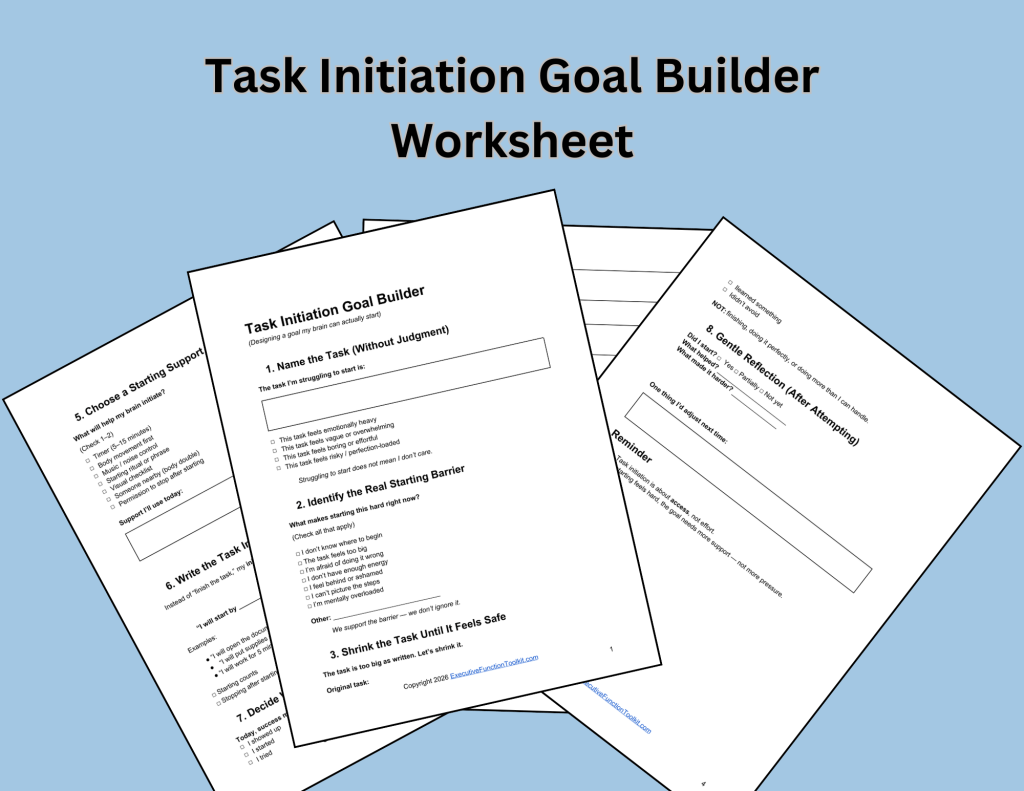
Task Initiation Goal Builder Worksheet

Monthly Goal Patterns Review Worksheet

Weekly Goal Progress Tracker
View all members-only Executive Function Toolkit worksheets