
I hope you’re ready for a rant, because that’s what you’re getting today.
What is unmasking? I’m still figuring that out myself. From what I can gather, it’s an under-researched and barely-understood part of being neurodivergent. And I’m definitely in the thick of it right now. My mind and body are exhausted. I can’t tell what’s truly me and what’s performance. And the cruelest question of all keeps echoing:
Were the best parts of me—the parts that made me proud and lovable—actually me?
Today was one of those days where nothing felt good, and everything felt unstable.
I normally explore the world by writing and creating. But today, none of it worked. No planner drafts. No workbook pages. No reflection exercises. Not even the self-discovery stuff that usually helps. There was just this dense, heavy fog of “I don’t know who I am or what I’m supposed to do.”
This is the part of unmasking no one warns you about:
You can understand the psychology.
You can write the worksheets.
You can do the identity work…
and still feel completely lost in your own skin.
I felt that way for most of the day.
The Crash of Unmasking
Unmasking isn’t just self-discovery.
It’s destabilizing.
It’s disorienting.
It strips away the identity you used to survive with—without handing you a new one to replace it.
When your internal narrative is shifting, when your sense of self feels foggy and fractured, even gentle questions can feel impossible.
So there I was, working on the childhood identity section of a workbook I’m building, and I hit the wall. Hard.
Frustrated.
Restless.
Miserable.
Everything felt like “too much” and “not enough” at the same time.
No worksheet was going to save me.
So I stopped and just sat in it.
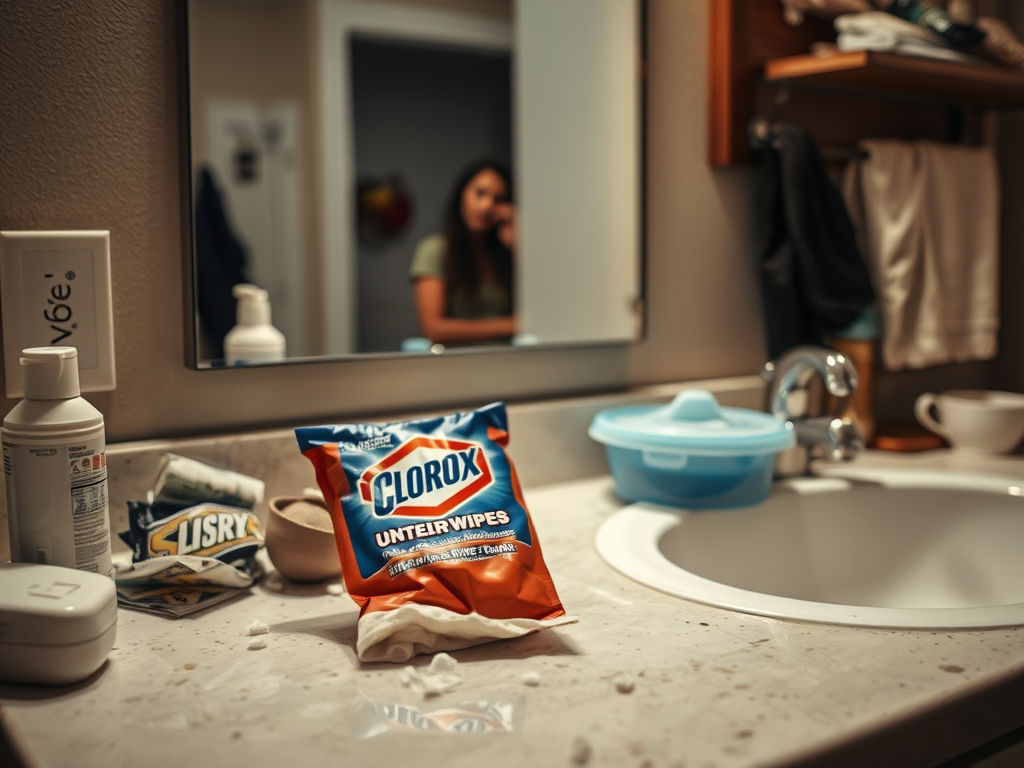
And then I noticed something: a container of Clorox wipes I’d been looking for. Next to me? A fridge that needed wiping down. So I grabbed two wipes and walked over.
It wasn’t planned or strategic. It wasn’t a productivity hack.
It was pure emotional instinct—a tiny grasp at control.
And it felt surprisingly good, even though the wipe-down was halfhearted and quick.
Then I thought about another thing I’d been avoiding.
I walked into the bathroom and spent maybe five minutes cleaning.
It wasn’t cleaned well.
But it was cleaned.
And it was something I’d been telling myself to do for months.
And the wildest part?
It made me feel better. Immediately.
Not because the bathroom mattered—
but because I did.
This Wasn’t About Cleaning. It Was About Self-Confidence.
The emotional hit wasn’t pride or discipline.
It was self-respect.
A tiny micro-moment of:
- “I did something I’ve been avoiding.”
- “I kept a small promise to myself.”
- “I can actually do things that support my life.”
For neurodivergent adults—especially during unmasking—small actions can give a bigger identity boost than introspection.
Not because reflection doesn’t matter.
But because action creates proof.
And when your identity is wobbly or dissolving, proof often feels better than analysis.
So What’s the Point of an Unmasking Course If Cleaning Helps More?
Here’s the answer I didn’t expect:
The unmasking course helps you understand why small actions feel so meaningful.
It doesn’t replace action.
It contextualizes it.
It helps you understand:
- why self-trust is fragile after years of masking
- why small wins rebuild identity faster than deep reflection
- why micro-actions regulate the nervous system
- why you collapse under pressure but re-regulate through environment
- why clarity comes after nervous system stability—not before
And today proved it:
Sometimes identity work doesn’t start in your mind.
It starts around you.
Sometimes the most neurodivergent-affirming thing you can do is:
- wipe down a counter
- take out the trash
- switch laundry
- organize a shelf
- wash a few dishes
- clean half a bathroom
Not because it makes you a “better adult”—
but because it gives you back a small sense of power when everything feels overwhelming.
The Big Realization From Today
I learned something important:
On low-energy, emotionally heavy days, I don’t need insight.
I need momentum.
I need a confidence boost more than a reflection worksheet.
I need something I can finish.
Something my brain can point to and say, “There. That. I did that.”
This wasn’t a failure of introspection.
It was listening to my nervous system.
And honestly?
That might be the most authentic part of unmasking so far.
If You’re Unmasking and Everything Feels Awful… Try This
Don’t force deep identity work if your body is begging for stability.
Try a micro-action instead:
- clean one surface
- put one thing away
- drink water
- take a shower
- change your sheets
- clear a corner
- fold two towels
Choose something with emotional meaning to you.
Because every small action is a vote for:
- capability
- competence
- self-trust
- groundedness
- survival
- and eventually… self-esteem
These tiny actions don’t replace the unmasking work.
They prepare your nervous system for it.
The Personal Takeaway
Today, cleaning the bathroom wasn’t about cleaning.
It was about giving myself a win when everything felt impossible.
It was about remembering:
- I’m trying
- I’m capable
- I can build momentum
- I can change my environment
- I can take care of myself in tiny ways
- I don’t need to solve my whole identity to do one small thing
And that matters.
So much more than I realized.
Leave a Reply