
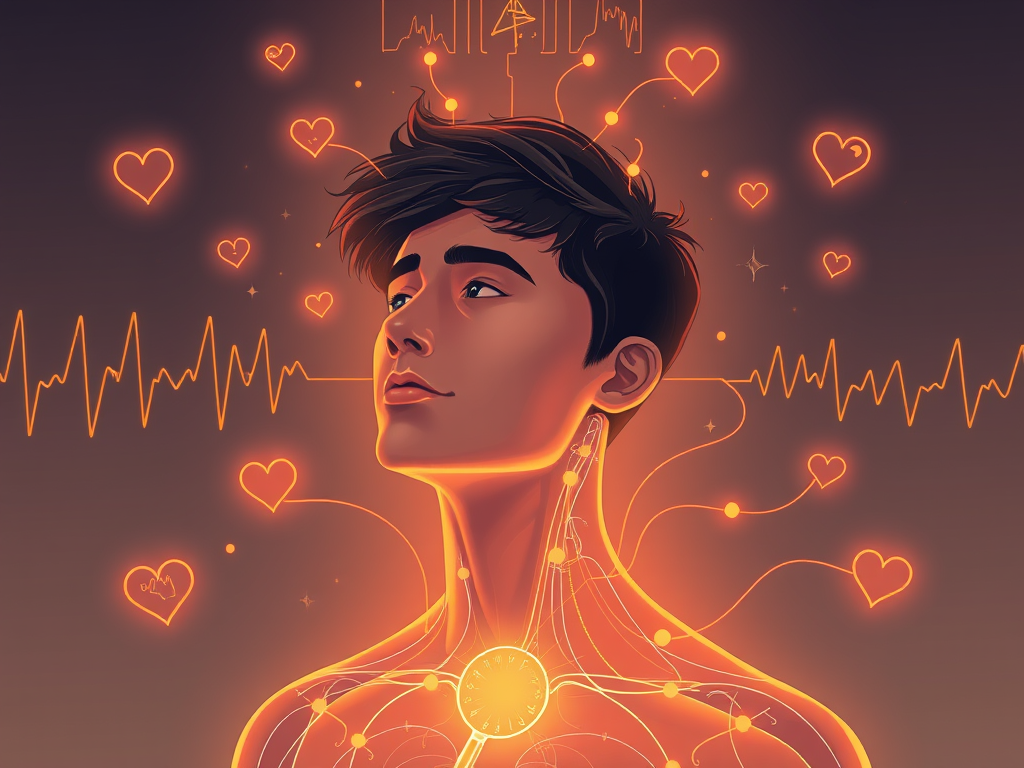
Have you ever realized you were hungry only after snapping at someone? Or felt suddenly overwhelmed without knowing why—until you noticed your heart racing or your breath stuck in your chest?
These are moments when your interoception was trying to speak up.
Interoception is your body’s way of telling you what’s going on inside. It’s the internal sense that helps you detect things like hunger, thirst, pain, temperature, your heartbeat, or the need to use the bathroom. It also plays a major role in helping you identify emotions, since most of our feelings come with physical signals—tight chests, fluttery stomachs, tense shoulders, or tears welling up.
But if this sense is muted, unclear, or overwhelming, it can be hard to stay regulated, respond to your needs, or even knowhow you’re feeling.
For many neurodivergent people, interoception isn’t something we learn about growing up—yet it may explain so much of what we’ve experienced. From emotional meltdowns to missed hunger cues, from burnout to anxiety spikes that feel like they come out of nowhere—interoception is often the missing piece.
In this post, we’ll explore what interoception is, how it connects to emotion and regulation, and what it means when your brain processes internal signals differently.
What Is Interoception?
Interoception is your ability to notice, interpret, and respond to your body’s internal signals. Think of it as your sixth sense—except instead of seeing or hearing something outside you, you’re tuning into sensations inside your body.
Examples of interoceptive signals:
- Feeling your heart beat faster when you’re nervous
- Noticing your stomach growling when you’re hungry
- Recognizing that you’re tired, hot, cold, nauseated, or tense
- Knowing you have to pee—even before it’s urgent
- Becoming aware that your breathing has changed
Like sight or hearing, this internal sense varies from person to person. Some people feel every flutter or ache in vivid detail. Others might feel disconnected from their body, unaware of hunger or anxiety until it becomes extreme. And some people fluctuate between both, depending on stress, sensory load, or emotional state.
Interoception vs. Other Senses: What Makes It Different?
Most of us grow up learning about five senses—sight, sound, smell, taste, and touch. Some people include balance and spatial awareness (vestibular and proprioception). But interoception is often left out, even though it’s just as essential to our survival and well-being.
The key difference?
Other senses tell you about the world around you. Interoception tells you about the world inside you.
Let’s break it down:
| Sense | Tells You About… | Example |
| Sight | Light and visual stimuli in your environment | Seeing a sunset or reading a book |
| Hearing | Vibrations and sound | Hearing someone call your name |
| Touch | External pressure, texture, temperature | Feeling the warmth of a blanket |
| Vestibular (balance) | Motion, gravity, spatial orientation | Knowing when you’re upside down or dizzy |
| Proprioception | Your body’s position and movement | Knowing where your hands are even with eyes closed |
| Interoception | Internal sensations and body signals | Feeling thirsty, tired, anxious, or needing the bathroom |
Unlike touch or sight, interoceptive awareness isn’t always conscious. It’s something we can learn to tune into—but many people haven’t been taught how.
What Happens When Interoception Is Miswired or Inaccessible?
When interoception works well, your brain gets timely and accurate updates about your body’s needs—and you respond naturally. You drink water when thirsty, rest when tired, notice rising tension before it explodes. But when interoception is disrupted, those signals can be confusing, delayed, or completely missing.
Here are a few ways interoceptive differences can show up:
1. Difficulty Identifying Internal States
Some people struggle to know what they’re feeling—physically or emotionally. This might look like:
- Not realizing you’re hungry until you’re dizzy
- Struggling to name whether you’re anxious, sad, or angry
- Missing early cues of stress or overwhelm
2. Delayed or Blunted Signals
For others, interoceptive feedback comes too late or feels muted. You might:
- Suddenly realize you desperately need the bathroom, with no warning
- Feel emotions build silently, then explode without understanding why
- Forget to eat because hunger doesn’t register
3. Hyperawareness or Overwhelm
Some people experience the opposite—intense, constant awareness of internal sensations. This can feel like:
- Feeling every flutter, pain, or tightness in your body and becoming preoccupied with them
- Becoming overwhelmed by normal bodily states (e.g., noticing your heartbeat and worrying it means something is wrong)
- Experiencing emotional flooding without understanding the trigger
4. Emotional and Behavioral Impacts
Since emotions are often physical experiences, interoception plays a huge role in emotional regulation. When you can’t feel or interpret what’s happening inside you:
- Emotional outbursts may seem to “come out of nowhere”
- Anxiety may build without explanation
- Self-care gets harder—because you don’t know what your body or brain needs
Interoception and Neurodivergence: Why It Matters
Many neurodivergent people—especially those with autism, ADHD, sensory processing disorder, or anxiety—experience interoceptive differences. These aren’t flaws or malfunctions. They’re part of a broader pattern in how the nervous system processes input from the world, including the world inside the body.
Here’s how interoception intersects with neurodivergence:
1. Autism
Autistic individuals may experience either reduced or heightened interoceptive awareness. For some, this means difficulty recognizing physical needs like hunger, pain, or emotional states. For others, it can mean intense focus on internal sensations—leading to overwhelm or difficulty shifting attention away.
This can impact:
- Self-regulation (e.g., noticing the early signs of sensory overload)
- Emotional awareness (alexithymia often overlaps with interoceptive challenges)
- Self-care routines (missing hunger cues or body temperature changes)
2. ADHD
People with ADHD often struggle with time blindness and task initiation—but interoceptive differences can also play a major role. For example:
- Forgetting to eat or use the bathroom because bodily signals don’t break through distractions
- Difficulty tracking energy levels or noticing overstimulation until it’s too late
- Misreading emotional cues as boredom, restlessness, or irritation
3. Anxiety & Trauma
Chronic anxiety or trauma can heighten or dull interoception. Some people become hyperaware of every physical change—interpreting a flutter as danger. Others disconnect from their body entirely, feeling numb or emotionally flat. Both patterns are adaptations to a nervous system that has learned not to feel safe.
4. Sensory Processing Disorder (SPD)
Interoception is one of the eight senses included in sensory processing. People with SPD may have trouble sorting through internal cues just like they do with external ones. For example:
- Not feeling pain until it’s severe
- Being overwhelmed by small sensations like stomach growling
- Struggling to identify fatigue until it becomes shutdown
How to Support and Strengthen Interoceptive Awareness
Interoceptive awareness isn’t fixed—it can be nurtured and supported. Whether you’re neurodivergent yourself or supporting someone who is, these strategies can help build a stronger connection between brain and body.
1. Build a Language for Sensations
Many people with interoceptive challenges struggle to describe what they’re feeling. Start by introducing a body-based vocabulary. For example:
- “Tight,” “fluttery,” “heavy,” “tingly,” “cold,” “empty,” “full”
- Pairing body sensations with emotions: “My chest feels heavy—maybe I’m sad?” or “My stomach is fluttery—am I nervous or excited?”
Try This: Create a sensation-emotion matching chart or use flashcards with different feelings and bodily cues.
2. Use Check-In Prompts
Regular check-ins can gently train awareness. Try asking:
- “What does my body need right now?”
- “Where do I feel energy or tension?”
- “Am I hungry, thirsty, tired, or overwhelmed?”
You can also try rating sensations on a 1–10 scale, like hunger, energy, or comfort levels.
Tip: Set reminders to pause every few hours and scan for internal signals.
3. Track Patterns Over Time
Keeping a journal or using a body awareness tracker can help connect the dots between sensation, behavior, and needs. This supports pattern recognition and builds trust with internal signals.
Example: “I had a headache, skipped lunch, and was cranky. Might’ve been hunger?”
4. Try Interoception-Focused Practices
Gentle, body-centered practices can improve interoceptive accuracy and self-regulation:
- Mindful breathing: noticing breath rhythm and movement
- Progressive muscle relaxation
- Sensory grounding: naming sensations from inside (heartbeat, breath) and outside (temperature, texture)
- Yoga or somatic movement, adapted for sensory needs
Note: These practices may need to be modified to feel safe and accessible, especially for trauma survivors or those with sensory sensitivities.
5. Co-Regulate and Narrate
For children or anyone developing these skills, it helps when caregivers or supporters name internal cues out loud:
- “You’ve been running around a lot—your heart’s probably beating fast. Let’s take some deep breaths.”
- “You’re crying and holding your stomach—maybe something feels yucky inside?”
This models curiosity about internal states and validates the importance of listening to your body.
Why Interoception Awareness Matters for Self-Advocacy and Mental Health
Interoception isn’t just about recognizing hunger or needing the bathroom—it’s foundational to emotional regulation, safety, and self-advocacy. When we’re more connected to our bodies, we’re better equipped to care for ourselves and communicate our needs to others.
1. Improved Emotional Regulation
Many emotional responses begin with bodily sensations—tight chest, racing heart, clenched jaw. Without interoceptive awareness, these signals can feel sudden and overwhelming. With it, we can name what’s happening and respond with more intentionality.
Example: “My chest feels tight. I think I’m getting anxious. I’ll take a break before I get overwhelmed.”
2. Earlier Intervention for Stress and Burnout
When we notice tension, exhaustion, or dysregulation early, we can take steps to recover before reaching a breaking point. Interoception acts like an internal radar, helping us spot the storm before it hits.
Without this awareness, people may miss early warning signs and only recognize their needs once they’re in full meltdown, shutdown, or illness.
3. Greater Self-Compassion
Understanding your internal experience helps you respond with kindness instead of self-blame. It allows you to say, “My body is trying to tell me something,” rather than, “What’s wrong with me?”
💬 Self-talk shift:
❌ “I’m so lazy today.”
✅ “My body feels depleted—maybe I need to rest.”
4. More Empowered Self-Advocacy
Whether you’re at school, work, or the doctor’s office, being able to describe your internal experience clearly can help you get the support you need.
For example:
- “I feel lightheaded and shaky—can I take a break?”
- “My body feels overstimulated. Can I wear noise-canceling headphones?”
- “I’m having trouble telling if I’m hungry—can we set timers for meals?”
Giving language to internal experiences is a powerful step toward being seen and supported.
Final Thoughts: There’s Wisdom in Your Body
Interoception may be invisible—but its impact is everywhere. From emotional health to physical safety, the ability to sense and interpret your internal world shapes how you show up in your external one.
If interoception feels confusing or distant, you’re not broken—you may just need support in strengthening this connection. With practice, patience, and compassion, you can build a deeper relationship with your body’s signals.
Because your body isn’t the enemy. It’s your companion—and it’s always speaking.
The real question is:
Are you ready to listen?
More from the Executive Function Toolkit:
Subscribe
Enter your email below to receive updates.
Leave a Reply